

How to Identify Ethical Coffee Sourcing: A Buyer's Checklist
Last Updated: October 30, 2026
Quick Summary
Ethical coffee sourcing means buying beans in a way that treats growers and workers fairly and cares for land and people across the supply chain. Because the phrase is not a legal term, check certifications, transparency, and farmer pay details yourself. Use labels as a starting point, not as proof.
- Ethical coffee sourcing is not a legal term, so no single standard applies to brands.
- Each certification verifies different things, so check what a seal actually covers.
- Favor third-party audits by accredited certifiers over self-reported claims.
- Ask a roaster what it paid per pound and when growers were paid.
- Score a bag on origin, grower named, certification, pay explanation, and roast date.
Table of Contents
- What Ethical Coffee Sourcing Means (and What It Doesn't)
- Ethical Coffee Certifications: What Each One Does and Doesn't Guarantee
- Checking Coffee Supply Chain Transparency Step by Step
- Judging Direct Trade Claims and Farmer Wages
- Scoring a Bag of Coffee Before You Buy It Again
- Frequently Asked Questions
What Ethical Coffee Sourcing Means (and What It Doesn't)
Ethical coffee sourcing means buying beans in a way that treats the farmers and workers who grow them fairly.
That gap matters for you as a buyer. A bag labeled "ethically sourced" tells you a brand has a goal. It does not tell you the coffee met a defined bar.
In practice, ethical sourcing usually covers a few areas:
- Farmer pay: Whether growers earn enough to cover their costs and live decently.
- Working conditions: Whether farm labor is safe and free of child or forced labor.
- Environmental care: Whether farming protects soil, water, and shade trees.
A brand that talks about one of these areas but stays silent on the others deserves a closer look.
Ethical Coffee Certifications: What Each One Does and Doesn't Guarantee
Certifications are the most common shortcut buyers use, and they are also the most misunderstood. Each program sets its own rules, audits different things, and stops short in different places. A logo on a bag means something specific, not everything. The table below compares the labels you are most likely to see on a shelf or product page.
| Program | Primary focus | What it typically verifies | What it does not guarantee |
|---|---|---|---|
| Fair Trade (Fairtrade International / Fair Trade USA) | Farmer economics and labor | Minimum price floors for many commodities, a social premium paid to cooperatives, prohibitions on forced and child labor, third-party audits | That every worker on every plot earns a living income; that the premium reaches individual pickers; that environmental practices go beyond a baseline |
| Rainforest Alliance | Environment, climate, and some labor | Deforestation-free sourcing, integrated pest management, water and soil practices, worker protections aligned with its standard, annual third-party audits | A minimum price or price premium; that smallholders can afford certification costs; that a single-issue label captures full supply-chain fairness |
| USDA Organic | Growing and processing methods | No synthetic pesticides or fertilizers on the listed acreage, separation from conventional product, organic system plans, certification by an accredited certifier | Fair pay, safe labor conditions, shade-grown habitat, or traceability to a specific farm |
| Bird-friendly (Smithsonian Migratory Bird Center) | Shade and habitat | Shade canopy requirements, structural diversity, and, at the highest tier, organic management, verified by inspectors | Farmer income levels, price terms, or labor conditions beyond the standard's scope |
| Direct trade (roaster-defined) | Buyer-farmer relationship | Nothing standardized; each roaster sets its own criteria and verification | Anything, unless the roaster publishes its terms, prices, and audit method |
A few mechanics are worth knowing before you trust a seal:
- Who audits matters. Look for third-party verification by an accredited certifier rather than self-reporting. A brand auditing itself is not the same as an independent inspector visiting the farm.
- Price guarantees differ by program. Some programs set a minimum price floor. Others add a premium on top of the market price without a floor. A premium on a low market price can still leave a grower short.
- Scope is often partial. A blend may use only some certified beans, and a multi-ingredient product may carry a logo that applies to one component. Check whether the claim covers the whole bag or a portion of it.
Use certifications to narrow your options, then check the details the label does not cover. A farm can meet a standard on paper and still face hard conditions, and a brand can run its own strong sourcing program without holding a logo at all. The next section shows how to test the claims a seal leaves open.
Checking Coffee Supply Chain Transparency Step by Step
Transparency is where most ethical claims get tested. A brand that is proud of its sourcing will usually show you the details. A brand that is vague may have something to hide, or may simply not have the records.
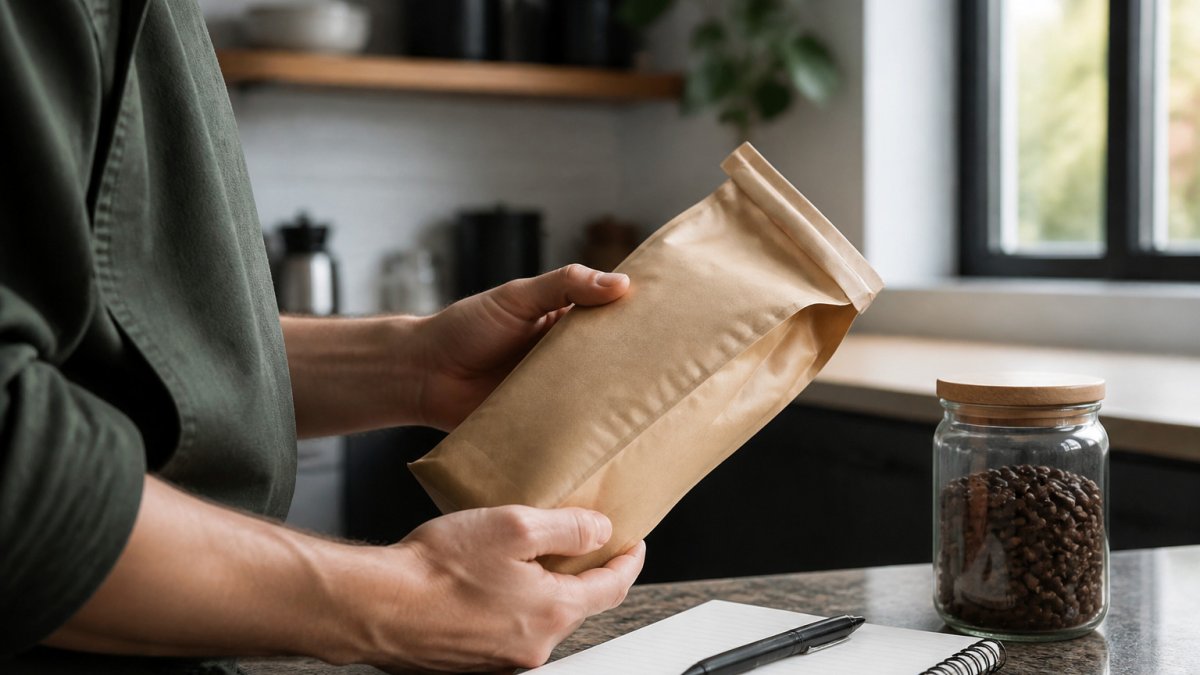
Here is a simple way to check a bag or a product page:
- Find the origin. Look for a country, region, and ideally a farm or cooperative name. "Blend of beans from South America" gives you almost nothing to verify.
- Look for the grower or cooperative. Named cooperatives and producer groups are easier to research than anonymous sourcing.
- Check the harvest or roast date. Recent dates suggest the brand tracks its inventory closely.
- Ask the brand directly. A good question is: "Which farm or co-op grew this lot, and what did you pay the grower?" Clear answers are a good sign.
- Compare what you see with what you're told. Does the product page match the bag? Does the story hold up across the brand's site, social media, and any sourcing reports?
Our own single-origin coffees list details such as the region, grower, altitude, and processing method. You can compare the Peru single origin and the Colombia single origin side by side and see what each one says about where it came from.


Judging Direct Trade Claims and Farmer Wages
"Direct trade" is a term many roasters use to describe buying beans straight from farmers. For a grounding in brewing fundamentals, read What Are the Best Coffee Brewing Methods for Beginners? What separates a real program from a slogan is evidence you can check.
Start with the price, and compare it to a benchmark. A fair-pay claim means little without a reference point.
Best Sellers Sample Pack: 6Bean, Cowboy, Breakfast, Peru, Mexico, Bali →
Look at the terms, not just the number. Payment structure tells you as much as the price:
- Payment timing. Are growers paid on delivery, or months later after the coffee sells? Prompt payment matters most to smallholders who cannot carry credit.
- Prepayment and advances. Does the brand front money for harvest labor and inputs, or shift that risk to the farmer?
- Contract length. A multi-year agreement gives a grower stability to invest in the farm. A one-off spot purchase does not.
Check whether the relationship is verifiable. Named farms, cooperatives, and repeated lots from the same producers are easier to research than anonymous sourcing.
Be skeptical of vague claims. "Fair wages," "ethical partnerships," and "we pay farmers well" are not measurable. Ask what a fair wage means to the brand and how it measures that against local living-income estimates. A brand that has done the work can usually explain its approach in plain terms; one that has not will change the subject.
Weigh the trade-offs. Direct relationships can cut out middlemen and improve traceability, but they also concentrate risk on the buyer and can favor larger farms that can meet volume and consistency requirements.
Our own single-origin coffees list details such as the region, grower, altitude, and processing method, which gives you a starting point for these questions. Compare the Peru single origin and the Colombia single origin side by side and see what each one says about where it came from.
Scoring a Bag of Coffee Before You Buy It Again
Once you know what to check, you can score a bag quickly. Give each area a simple yes, partly, or no. Then decide what matters most to you.
Use this quick checklist:
- Origin named at the region or farm level
- Grower or cooperative named
- Third-party certification listed, with its limits understood
- Brand explains how farmers are paid
A bag with most of these boxes checked is a strong candidate.
Our Best Sellers Sample Pack lets you sample several of our best-selling coffees in 2oz packs for $24.99. Try the sample pack alongside the Colombia single origin and the Peru single origin, and note which details matter to you most.

Ethical sourcing is worth paying attention to because it affects real people. Use labels as clues, check the details, and reward brands that are willing to show their work.
Frequently Asked Questions
What does ethically sourced coffee mean?
Ethically sourced coffee generally means the beans were bought in a way that aims to treat farmers and workers fairly, protect the environment and be transparent about where the coffee came from. The phrase is not regulated in the United States, so it has no fixed legal definition. That is why buyers should look for specifics, such as named farms or cooperatives, disclosed prices paid to growers, and recognized third-party certifications, rather than relying on the word ethical alone.
Which certifications should you look for when buying ethical coffee?
Common certifications include Fair Trade Certified, Rainforest Alliance, and USDA Organic. Each covers different things: Fair Trade focuses on minimum prices and premiums paid to farmer cooperatives, Rainforest Alliance focuses on farm environmental and labor practices, and USDA Organic focuses on how crops are grown without synthetic inputs. A single certification rarely covers every ethical concern, so check which standards a bag claims and what each one actually requires.
Is Fair Trade coffee always ethically sourced?
Fair Trade coffee meets a defined set of social, economic and environmental criteria, which makes it a strong signal, but it is not a complete guarantee. Certification depends on audits and farm-level compliance, and a certified label does not tell you how much of the price reached the farmer or whether a roaster buys directly. Treat Fair Trade as one piece of evidence and combine it with traceability details and disclosed pricing.
How can you verify where coffee beans come from?
Start with the bag. Look for a named farm, cooperative, region and altitude rather than just a country. Then check whether the roaster publishes its importer, the lot or harvest year, and how the beans were processed. Reputable roasters usually answer these questions readily. If a company cannot name where its coffee was grown, that is a sign the supply chain is not transparent enough to verify.
