

Coffee Blend for Espresso Machine: Picks by Roast and Use
Last Updated: October 28, 2026
Quick Summary
A coffee blend for espresso machine brewing should balance acidity, bitterness, and body so it holds up under nine bars of pressure. Blends give you more room for error than single origins, and roast level should match your basket type and how you drink your shots.
- Every Skelton Mills blend in the comparison costs $24.99.
- The Italian Roast is the darkest roast, blending specialty grade Arabica and Robusta.
- The Robusta is a medium-roasted single origin from West Java with cacao, Brazil nut, and malt notes.
- Aim for a shot in roughly 25 to 30 seconds at a 1:2 ratio, such as 18 grams in and 36 grams out.
- Leave roughly 2mm of space between the top of the puck and the shower screen.
Table of Contents
- What a Coffee Blend for Espresso Machine Use Actually Needs
- The Best Coffee Beans for Espresso Machine Setups: Quick Comparison
- Espresso Coffee Blends: Six Skelton Mills Options Ranked by Roast
- Medium Roast Coffee for Espresso: Who It Suits and Who It Doesn't
- Coffee Beans for Lattes: Matching Roast to Milk
- Grind, Dose, and Freshness: What Decides Shot Quality
- Match a Blend to Your Machine and Counter Space
- Order Your Next Bag With a Roast in Mind
- Frequently Asked Questions
What a Coffee Blend for Espresso Machine Use Actually Needs
A coffee blend for espresso machine brewing has one job: hold up under pressure. According to Serious Eats' 2026 espresso bean testing, which evaluated 15 espresso beans and named six top picks, the best blends balance acidity, bitterness, and sweetness while delivering a medium- to full-bodied shot. At Skelton Mills Coffee, we roast to order.
Here is the part most guides skip. The puck needs structure, the roast needs to stand up to nine bars of pressure, and the grind has to resist channeling.
Acidity, Bitterness, and Body in the Cup
Espresso extraction is the process of forcing hot water through a compacted bed of finely ground coffee under pressure. Three variables decide whether the result tastes balanced or harsh: acidity, bitterness, and body.
- Acidity gives the shot its brightness and fruit notes. Too much reads as sour.
- Bitterness comes from darker roasting and longer extraction. Too much reads as ash.
- Body is the syrupy weight on your tongue. Blends with Robusta content tend to build more of it.
A blend that hits all three is what you want in the basket. Single origins can work, but blends give you more room for error.
The Best Coffee Beans for Espresso Machine Setups: Quick Comparison
Every Skelton Mills option below is $24.99. Here is the short version before the detail.
| Blend | Roast Level | Flavor Direction | Best For |
|---|---|---|---|
| 6 Bean Blend | Dark | Complex, house-blend depth | Espresso purists |
| Italian Roast | Darkest | Intense, syrupy | Traditional shots |
| Italian Roast, Extra Dark | Extra dark, oily | Heavy, low acidity | Milk drinks |
| Robusta | Medium | Cacao, Brazil nut, malt | Body and crema |
| Medium Blend | Medium | Balanced body and acidity | All-around brewing |
| Cowboy Blend | Dark and medium | Cocoa, caramel, vanilla | Crowd-pleasing shots |
If you want to see the full range side by side, browse the blends collection before you commit to one bag.
Espresso Coffee Blends: Six Skelton Mills Options Ranked by Roast
Espresso coffee blends run from medium to extra dark, and where a blend sits on that scale tells you more about how it will taste than any label claim.
Dark and Extra-Dark Picks
The Italian Roast is our darkest roast, a slow-roasted blend of specialty grade Arabica and Robusta.

The 6 Bean Blend is the dark horse here. A meticulous blend of coffees from around the world, it is great for espresso.

Balanced and Medium Picks
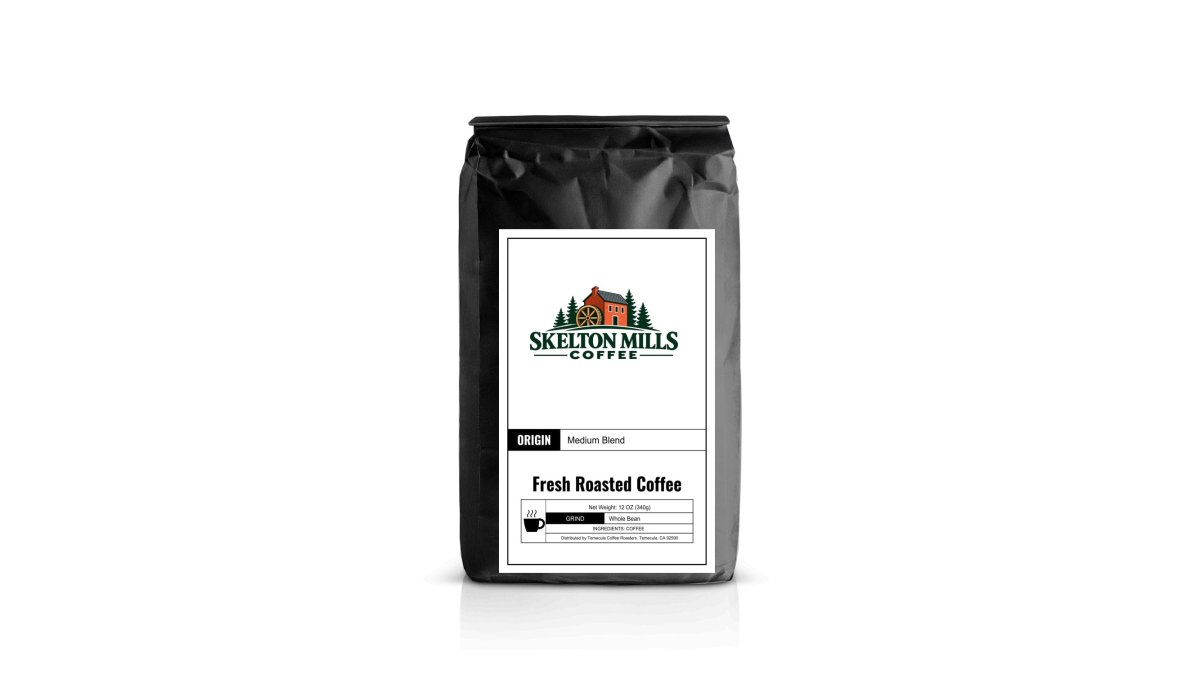
The Medium Blend is a well-balanced house blend with medium body and acidity.
The Robusta is a medium-roasted single origin from West Java, with cacao, Brazil nut, and malt notes and a full body. For a balanced medium roast, see the medium blend product page.
Medium Roast Coffee for Espresso: Who It Suits and Who It Doesn't
Medium roast coffee for espresso suits drinkers who want clarity and balance without the smoky edge of a dark roast.
The Cowboy Blend combines dark and medium roasted coffee for cocoa, caramel, and vanilla tones.
Coffee Beans for Lattes: Matching Roast to Milk
Watch out: light roasts and high-acid single origins make a latte taste thin and sour. If milk is your default, start dark.
Grind, Dose, and Freshness: What Decides Shot Quality
Grind size, dose, and freshness decide shot quality more than the bag label does, and they interact in a fixed order. Change one without holding the other two steady and you cannot tell which variable moved the shot. Research published in Electronics on espresso quality and machine parameters identified extraction time, flow rate, and espresso volume as the key measurable variables linking machine data to cup quality.
Grind: Consistency Beats Fineness
Grind consistency matters more than grind fineness. A burr grinder produces particles of similar size, so water flows through the puck evenly; a blade grinder produces a mix of dust and boulders, so water finds the coarse channels and leaves the fine particles under-extracted. The result is a shot that tastes both sour and bitter at once. If you are buying one upgrade, buy the burr grinder first.
A practical starting point for a non-pressurized basket is a grind that yields a shot in roughly 25 to 30 seconds at a 1:2 ratio, for example, 18 grams in, about 36 grams out. Adjust in small steps: finer if the shot runs fast and tastes sour, coarser if it runs slow and tastes bitter. Change one notch at a time and taste before adjusting again.
Dose: Hold It Constant
Dose should stay consistent shot to shot. A precision scale removes guesswork, and weighing both the dose in and the yield out is the fastest way to repeat a good shot. Weigh the basket empty, tare, then dose. Weigh the cup, tare, then pull. Without the output weight, you are tuning blind.
Freshness: The Multiplier
Freshness is the multiplier. Beans roasted to order, like ours, give you a starting point. Coffee releases carbon dioxide for days after roasting, and that gas affects how the puck resists water. Beans that are too fresh can run fast and taste sharp; beans that are months old taste flat and stale.
The Order of Operations
Dial in in this sequence: fix the dose, then adjust grind to hit your target time and yield, then taste and adjust roast or ratio. Changing grind before dose is stable is the most common reason home baristas chase their own tail.
For the full breakdown, read our guide to coffee bean freshness rules.
Match a Blend to Your Machine and Counter Space
Machine type and portafilter size change what you should buy, and most buying guides skip the compatibility check that prevents a wasted bag. Before you commit to a roast, confirm three things about your setup: basket diameter, basket type (pressurized vs. non-pressurized), and headroom above the puck.
Check Basket Diameter First
Portafilter baskets come in common diameters, 51mm, 54mm, and 58mm are the most frequent on home machines. The diameter sets how much coffee the basket holds at a given dose depth, which in turn changes how fine you need to grind. A 58mm basket at an 18-gram dose gives you a deeper puck than a 51mm basket at the same dose, so the 58mm setup tolerates a slightly coarser grind before it channels. If you are unsure of your diameter, measure the inside of the basket with calipers or check the machine manual; do not guess from the portafilter's outside width.
Pressurized vs. Non-Pressurized Baskets
A pressurized basket uses a small valve to create back-pressure, so it forgives a coarser grind and a less consistent one. A non-pressurized basket relies on the puck itself to build resistance, which means grind consistency matters far more. This is the single biggest fork in roast selection:
| Machine Setup | Grind Need | Recommended Roast |
|---|---|---|
| Non-pressurized 58mm basket | Fine, consistent | Dark or medium-dark |
| Non-pressurized 51-54mm basket | Fine, slightly coarser than 58mm | Medium-dark |
| Pressurized basket | Coarser, forgiving | Medium |
| Entry-level machine with pressurized basket | Medium-fine | Medium Blend |
| Manual lever | Fine, dialed in | 6 Bean Blend |
A medium roast is the safer starting point on a pressurized basket because the valve masks some inconsistency. On a non-pressurized 58mm basket, a darker roast gives you more body to work with while you dial in the grind.
Headroom and Dose
Leave roughly 2mm of space between the top of the puck and the shower screen. Too little headroom and the puck cracks against the screen; too much and water pools. If your basket is rated for 18 grams, dose to 18 grams rather than filling to the rim. A precision scale removes the guesswork here, and it is the one measurement tool worth owning before any other upgrade.
Counter Space Reality Check
A burr grinder, a scale, and a knock box take up real estate, and small kitchens force a priority order. If your counter is tight, prioritize the grinder over everything else, grind consistency affects every shot, while a knock box can be replaced by a sturdy bowl and a scale can be small. Measure your available depth before buying a grinder with a tall hopper; a short hopper or a single-dose setup fits under most upper cabinets.
Order Your Next Bag With a Roast in Mind
The hardest part of espresso is not the machine. It is buying a bag that matches how you actually drink coffee.
We roast every batch to order. Our blends, single origins, and flavored options give you room to find your roast. Get started with Skelton Mills Coffee.
Frequently Asked Questions
What type of coffee blend is best for an espresso machine?
There is no single best blend. Match the roast to how you drink it.
Can you use any coffee beans in an espresso machine?
The 6 Bean Blend is listed as great for espresso.
Are Arabica and Robusta blends good for espresso?
Skelton Mills' Italian Roast is a slow-roasted blend of specialty grade Arabica and Robusta, and its Robusta single origin from West Java carries cacao, Brazil nut, and malt notes.
What coffee blend works best for espresso with milk?
Skelton Mills' 6 Bean Blend is a dark house blend listed as great for espresso, and the Cowboy Blend combines dark and medium roasted coffee with cocoa, caramel, and vanilla tones.
How should I store coffee beans for an espresso machine?
Keep beans in an airtight container away from light, heat, and moisture, and grind right before pulling a shot. Freshness matters because espresso extraction depends on gases still present in the bean. Buy bags you will finish within a few weeks rather than stockpiling, and skip the fridge, where condensation and odors transfer into the beans.
